



How to Brew Green Tea: The Best Way to Achieve Perfect Flavour and Avoid Bitterness
Green tea brewing marries precision and tradition to deliver a cup that balances delicate aromatics, umami richness and subtle sweetness. Whether you are seeking an invigorating morning ritual or a refined interlude during a high tea celebration, mastering water temperature, steeping time and leaf ratio ensures consistently delightful results. In this guide on brewing green tea, you will uncover what makes green tea unique, discover optimal temperature and timing for each variety, explore leaf-to-water ratios, and learn specialty methods from Sencha to cold brew. Along the way you will see how these techniques enhance flavour, preserve antioxidants and elevate any elegant gathering—whether enjoyed at home or as part of a premium Sunshine Coast high tea experience curated by Aimee Provence.
What Is Green Tea and Why Does Brewing Matter?
Green tea is a minimally oxidised infusion made from Camellia sinensis leaves, prized for its bright colour, vegetal notes and healthful antioxidants. Proper brewing unlocks its nuanced flavour compounds—amino acids like L-theanine impart sweetness while tannins introduce gentle astringency—so that each cup reveals balanced complexity. Understanding these fundamentals creates a foundation for all brewing decisions and connects every subsequent technique back to achieving perfection in flavour and wellness.
What Defines Green Tea and Its Unique Characteristics?
Green tea derives its signature profile from minimal oxidation of fresh leaves, preserving chlorophyll and delicate catechins. This process yields a spectrum of characteristics—fresh grassiness in Sencha, roasted nuttiness in Hojicha and toasted rice warmth in Genmaicha—that reflect both varietal attributes and regional terroir. Because no fermentation follows leaf harvesting, the interplay of chlorophyll and polyphenols remains intact, offering both vibrant flavour and potent antioxidant benefits.
The relationship between processing and taste highlights why brewing matters: delicate aromas can turn bitter if water is too hot or steeping too long, while cooler temperatures accentuate umami and vegetal sweetness. Building on this understanding leads us to examine how diverse green tea types affect preparation techniques and flavour outcomes.
Steamed Green Tea Flavour: The Impact of Processing and Withering Time on Taste Quality
Processing plays a decisive role in the flavour of steamed green tea (SGT), particularly withering, which is fundamental to its taste development. However, the effect of withering time on the taste quality of ‘Qiancha 1’ (Camellia sinensis var. sinensis) steamed green tea (QSGT) has not been previously reported. In this study, fresh leaves from ‘Qiancha 1’ were processed into SGTs after withering for different durations and evaluated using a chromatographic method in conjunction with an electronic tongue (E-tongue) and sensory evaluation, with ‘Huacha 1’ (Camellia sinensis var. sinensis) steamed green tea (HSGT) used as the control. Galloylated catechins were converted to non-galloylated catechins more significantly in ‘Huacha 1’ than in ‘Qiancha 1’ during withering. QSGT produced from fresh leaves after 6 hours of withering was among the best, exhibiting umami and mellow tastes in sensory evaluation, and QSGT demonstrated higher bitter, astringent, umami, and sweet taste values than HSGT in the E-tongue evaluation. In QSGT, L-theanine, L-glutamate (Glu), (−)-epigallocatechin-3-gallate (EGCG), L-histidine (His), and L-methionine (Met) were the predominant compounds contributing to umami, bitter, and astringent tastes, whereas in HSGT, L-theanine, Glu, EGCG, His, Met, and L-arginine (Arg) were predominant. Principal component analysis and orthogonal partial least squares discriminant analysis further revealed that differences in polyphenol metabolism, which contribute to the formation of bitter and astringent tastes, are essential indicators for distinguishing SGTs produced from different withering times and cultivars. Overall, this study presents an approach for enhancing the taste of SGT through personalised processing methods tailored to different tea cultivars.
Effect of spreading time on the taste quality of steamed green tea based on E-tongue evaluation and chemometric statistical analysis, 2024
How Do Different Types of Green Tea Affect Brewing Methods?
Green tea varieties encompass a range of processing styles and leaf forms that demand specific brewing approaches to showcase their best qualities in brewing the perfect cup of tea.
- Sencha features needle-shaped leaves with a bright, grassy flavour requiring moderate heat.
- Gyokuro delivers intense umami through shaded cultivation and benefits from low-temperature steeping.
- Hojicha undergoes roasting, yielding caramelised notes that tolerate slightly hotter water.
- Genmaicha blends toasted brown rice for a savoury-sweet balance suited to mid-range temperatures.
- Matcha is a powdered tea whisked into suspension, calling for lime-warm water and vigorous whisking.
Why Is Proper Brewing Essential for Green Tea Flavour and Health Benefits?
Accurate brewing preserves L-theanine, catechins and vitamin C, which support relaxation, cardiovascular health and gentle cognitive stimulation. Overly hot water extracts excessive tannins, causing bitterness and diminishing antioxidant potency, while under-extraction yields weak flavour and under-utilised health compounds. By aligning water temperature and steeping duration with each tea’s processing profile, you achieve both a refined sensory experience and maximal wellness benefits. This precision in brewing green tea forms the core of any elevated tea ritual.
What Is the Ideal Water Temperature for Brewing Green Tea?
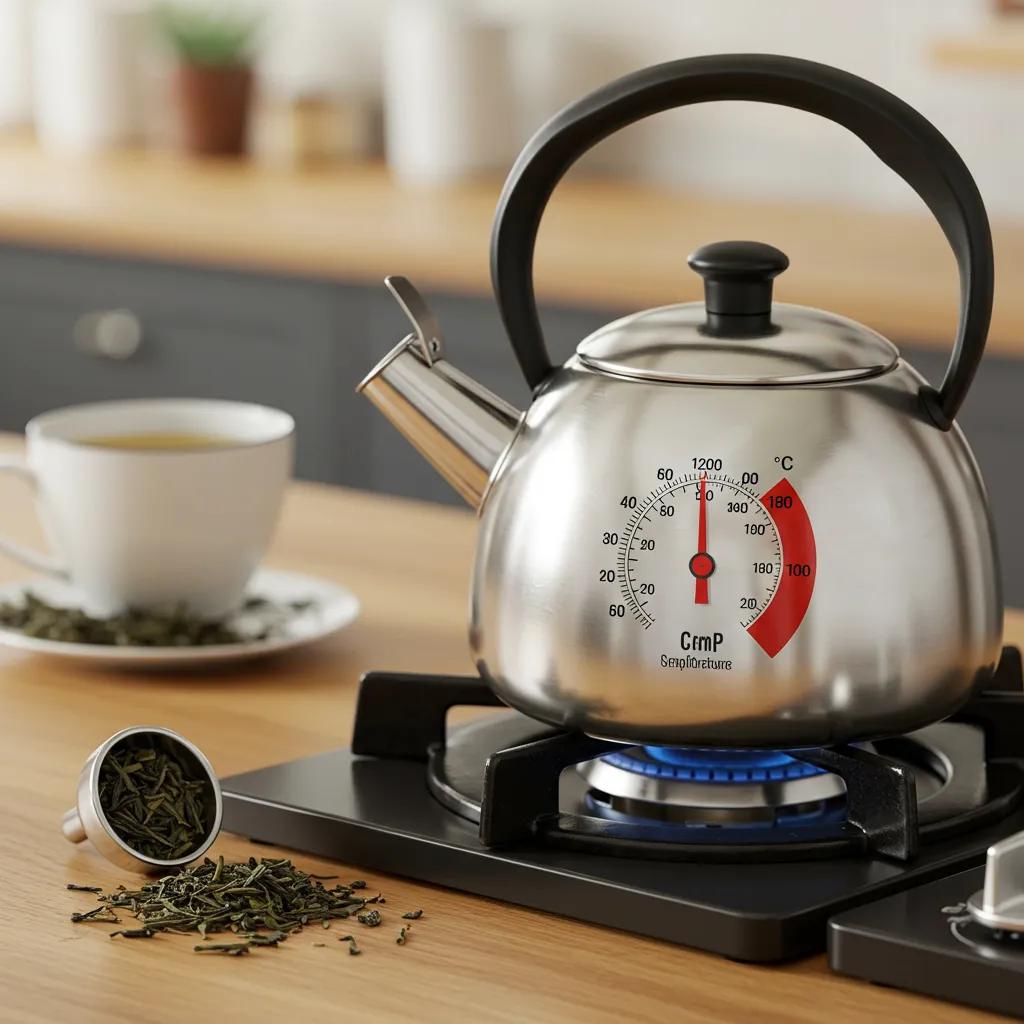
The ideal water temperature for brewing green tea balances extraction of sweet amino acids against limiting bitter tannins. Temperature control is the most critical factor in achieving smooth, nuanced flavour and avoiding harsh astringency. By tailoring the heat to each tea’s leaf structure and processing method, you ensure that delicate aromas and beneficial compounds infuse harmoniously into every cup.
How Does Water Temperature Influence Green Tea Flavour and Bitterness?
Water temperature dictates the rate at which soluble compounds dissolve from tea leaves. Cooler water (40–60 °C) emphasises umami and L-theanine, producing a smooth, savoury-sweet liquor. Warmer water (70–90 °C) accelerates tannin release, which adds brisk astringency but risks bitterness if not properly managed. In semantic terms: Green tea (Subject) – requires (Predicate) – precise temperature control (Object) to balance sweetness and astringency.
Careful temperature management therefore forms the heart of brewing green tea, guiding every step from leaf selection to cup presentation.
What Are the Recommended Temperatures for Popular Green Tea Types?
Below is a comparison of common Japanese green teas and their optimal brewing ranges to achieve peak flavour and aroma.
How Can You Achieve and Maintain the Correct Brewing Temperature?
To control water heat precisely, follow these practical steps:
- Use an electric kettle with adjustable temperature settings for direct heat control.
- Employ a kettle thermometer and pour hot water into a cooled vessel to lower temperature.
- Allow freshly boiled water to rest briefly—approximately 2–3 minutes—to reach the target temperature.
These methods preserve optimal heat levels, ensuring that temperature-sensitive compounds infuse properly and deliver the desired flavour profile.
How Long Should You Steep Green Tea to Avoid Bitterness?

Steeping time influences the concentration of flavour molecules and the balance between sweetness and astringency. Precise timing prevents excessive tannin extraction that leads to bitterness, while ensuring sufficient release of aromatic and healthful compounds. By aligning infusion duration with each tea’s characteristics, you maintain clarity of taste and preserve beneficial antioxidants in every cup.
What Is the Optimal Steeping Time for Different Green Tea Varieties?
Steeping durations vary by tea type to capture their best flavour and minimise harshness: how to make a tea cocktail
- Gyokuro: 90–150 seconds
- Sencha: 60–90 seconds
- Hojicha: 30–60 seconds
- Genmaicha: 30–60 seconds
Adjusting steep times within these guidelines allows you to fine-tune strength and aromatic intensity for each infusion.
How Does Steeping Time Affect Flavour and Strength?
Extending steeping time increases the concentration of polyphenols, boosting body and amber colour but risking bitterness from over-released tannins. Shorter infusions yield lighter liquor and delicate flavour notes, ideal for showcasing nuanced aromas. Balancing infusion duration and water temperature creates layered taste profiles that evolve across multiple infusions, inviting you to explore the tea’s depth.
This relationship between time and taste underscores why every second counts in mastering green tea brewing.
Can You Reuse Tea Leaves for Multiple Infusions?
Yes, high-quality green tea leaves can serve through two to four infusions, each revealing distinct flavour nuances. To optimise each steep:
- Increase water temperature or extend steeping by 15–30 seconds for subsequent infusions.
- Use fresh water to maintain clarity and oxygenation.
- Gently swirl leaves between brews to encourage even extraction.
Reusing leaves reduces waste, extends sensory enjoyment and highlights the sustained release of beneficial antioxidants over repeated brews.
What Is the Best Tea Leaf to Water Ratio for Brewing Green Tea?
Finding the ideal leaf-to-water ratio ensures balanced strength and flavour clarity. Too little leaf yields a pale, insipid infusion, while too much can overwhelm with intense bitterness. A standard guideline of 2 g of loose-leaf tea per 180 ml of water offers a harmonious starting point, which you can adjust to match personal taste and specific tea characteristics.
How Much Loose Leaf Green Tea Should You Use Per Cup?
A precise measurement of 2 g per 180 ml (approximately one teaspoon per six-ounce cup) strikes an elegant balance between flavour intensity and smoothness. This ratio supports extraction of both sweet amino acids and mild tannins without excessive astringency. Adjust within 10% to suit individual preference for lighter or stronger cups while maintaining overall balance.
How Do Ratios Vary Between Different Green Tea Types?
Below is a comparative view of leaf-to-water guidelines tailored to varietal delicacy and robustness.
How Does Leaf Quality Impact Brewing Ratios?
Premium loose-leaf teas with intact, whole leaves deliver more complex flavour compounds per gram than broken or bagged varieties. Whole leaves require slightly greater ratio precision—often 5–10% less tea—to avoid overpowering flavour. Lower-grade or fannings may need increased quantity to compensate for diminished aromatic oils. Selecting high-grade loose leaf thus not only elevates taste but also simplifies ratio management for consistently refined results.
How Do You Brew Specialty Green Teas for Optimal Taste?
Specialty green teas benefit from customised methods that accentuate unique processing and flavour profiles. Below are targeted steps to bring out each tea’s best qualities.
How to Brew Sencha: Temperature, Time, and Technique
- Warm your teapot and cup with hot water, then discard the rinse water.
- Measure 2 g of Sencha per 180 ml and place leaves in a kyusu or glass infuser.
- Heat water to 75–80 °C and pour over leaves.
- Steep for 60–90 seconds, watching the liquor colour shift to pale yellow-green.
- Decant immediately to halt extraction and enjoy a fresh, grassy infusion.
This approach ensures a vibrant, balanced cup that highlights Sencha’s bright vegetal notes.
What Is the Proper Brewing Method for Gyokuro?
- Pre-chill teaware briefly to retain lower infusion temperature.
- Use 3 g of Gyokuro for 180 ml of water heated to 40–60 °C.
- Steep for 90–150 seconds, stirring gently to encourage even umami release.
- Pour slowly from a low height to avoid agitation that extracts bitterness.
This low-temperature, prolonged infusion accentuates Gyokuro’s renowned savoury and sweet complexity.
How to Prepare Hojicha and Genmaicha for Rich Flavour
- Hojicha: Roast-processed leaves thrive at 85–90 °C with a 30–60 second steep, producing caramel and nutty warmth.
- Genmaicha: Use 2 g per 180 ml at 75–85 °C, steeping 30–60 seconds to meld toasted rice and green leaf harmoniously.
These methods coax out the roasted, comforting notes that define each blend’s character.
How to Make Matcha: Traditional Preparation and Modern Variations
Matcha is whisked rather than steeped, yielding a full-spectrum infusion rich in chlorophyll and antioxidants. Sift 1 g of ceremonial-grade powder into a bowl, add 60 ml of 60–70 °C water and whisk in a zigzag motion until frothy. For a lighter café-style latte, blend matcha with steamed milk and natural sweetener. This whisked approach delivers a creamy texture and vibrant green hue, ideal for ceremonial or contemporary tea presentations.
How Can You Cold Brew Green Tea for a Refreshing Taste?
- Place 4 g of loose-leaf tea per 300 ml of cold, filtered water in a jug.
- Cover and refrigerate for 6–8 hours or overnight.
- Strain leaves before serving over ice with a slice of citrus or fresh mint.
This gentle extraction yields a crisp, lightly sweet liquor with reduced astringency and lower caffeine.
What Are Common Green Tea Brewing Problems and How Can You Fix Them?
Even slight deviations in temperature, steeping time or equipment can compromise flavour and clarity. Addressing these common issues ensures every cup meets your highest standards.
Why Is My Green Tea Bitter and How Do I Avoid It?
Bitterness results from excessive tannin extraction, often due to water hotter than 80 °C or steeping longer than 90 seconds. To prevent harsh astringency, lower your water temperature by 10–20 °C and reduce infusion time by 15–30 seconds. Precise control of these variables restores balance and sweetness to the cup.
Why Does My Green Tea Taste Weak or Bland?
Under-extraction occurs when water is too cool or steeping too brief, leaving flavours underdeveloped. Increase temperature by 5–10 °C or extend steep time by 15–30 seconds to unlock richer vegetal and umami notes. Adjust your leaf-to-water ratio within the recommended guidelines to achieve fuller taste intensity.
How Can Brewing Equipment Affect Your Green Tea Experience?
Quality teaware—such as a ceramic kyusu or glass infuser—supports even heat distribution and prevents metallic off-flavours. Using an infuser with fine mesh avoids leaf sediment, while pre-warming vessels preserves temperature consistency. Selecting appropriate tools enhances both flavour clarity and aesthetic presentation in every cup.
How Can You Pair Green Tea with Gourmet High Tea Delights?
Pairing green tea with elegant pastries and savouries elevates the sensory experience of a high tea setting. The right match harmonises taste, texture and aroma to create a memorable high tea journey.
- Delicate Sencha complements citrus macarons and light fruit tarts by accentuating floral sweetness.
- Roasted Hojicha balances rich chocolate éclairs or nut-based financiers with its warm, toasty profile.
- Savoury Genmaicha pairs beautifully with smoked salmon finger sandwiches and herb-infused quiches.
- Ceremonial Matcha enhances sweet red-bean pastries or cream-filled choux with its creamy umami depth.
These thoughtful pairings enhance both tea and confection, shaping an exquisite high tea experience. Guests who book a premium high tea event with Aimee Provence will enjoy expertly brewed green teas alongside gourmet delights, creating a refined celebration in the heart of the Sunshine Coast.
Enjoying perfectly brewed green tea at home or within a curated high tea setting transforms a simple infusion into an elegant ritual that delights the palate and nourishes the body. By mastering temperature, steeping time, leaf ratios and specialty methods, you unlock every nuance of aroma, flavour and healthful benefits. Embrace these techniques to elevate your tea practice, explore new varietals and savour the balance of taste and tradition in every cup.
